LANDMARK RESEARCH INFORMS SOUTH AFRICA’S WAY FORWARD IN THE ENERGY REVOLUTION

This Wednesday marked a step forward in South Africa’s inevitable energy transition. Insightful research commissioned by IYF and funded by the British High Commission was handed over to the Department of Higher Education in a ceremony hosted by BMW South Africa in Johannesburg. The research assessed South Africa’s current and potential readiness for the Electric Vehicle (EV) transition and the findings of the study will influence future upskilling, upscaling and capacitating in the EV training sector.

Facilitated by Chilu Lemba, the event provided insight from various collaborative entities about the future of EVs in South Africa, and particularly the significance of TVETs in curating new curricula for the inevitable influx of electric vehicles into South Africa.

Speaking to the research, Head Curriculum portfolio for TVET colleges, DHET, Mr Vele posited that “If we are to have qualified EV engineers in the country in the next 5 years, or even the next ten years, we have a limited window of opportunity to ensure that EV courses and practical training is available.”

The IYF, which has been updating existing TVET curricula for the past year through their engineering offshoot, High Gear, mentioned how the research was imperative in understanding the skills gap amongst lecturers in TVETs. The IYF’s Country Director, Arusha Naicker, mentioned that while High Gear’s programmes had been successful in increasing student readiness for industry through practical and digital learning, lecturers were not fully capacitated to facilitate or lead curricula on EV technical procedures and maintenance. The “outdated” curricula is also attributed to the lack of EVs in South Africa currently – however the number of purchased electric vehicles is on the rise and this will inevitably lead to the need for efficiently trained and skilled technicians in the sector.

The research, which was conducted by Ngawethu Consulting, will essentially influence how IYF and DHET plan to move forward with pragmatically and functionally resourcing and capacitating TVET lecturers with the knowledge, curricula and requirements necessary to prepare automotive engineering students for the new world of EVs.

Speakers, which also included Khalil Patel, the Programme Director for High Gear, highlighted the importance of championing critical thinking in TVET courses, and how future EV courses need to have a foundational umbrella understanding of the EV market and Green Supply Chain – and not only be rooted in a practical understanding of EV mechanics.

Singh was incredibly positive about the outcomes of the research, as while they highlighted many hurdles and skills gaps which will need to be addressed in order to move forward in the energy transition, it provided DHET with a useful guideline as to where to place their focus in preparing South Africa for the transition, both timeously and thoughtfully.

Rebecca Tron, Head of Economic Growth, Southern Africa, for the British High Commission Pretoria, commended the IYF’s efforts and DHET’s positive response to the research, noting that South Africa’s commitment to a greener economy was not only beneficial globally, but would also contribute to the country’s intercontinental automotive trading potential, knowledge economy and expanded human capital.

Kyle Dreyer, Sales Manager, BMW, the event host, instilled some interactivity into the event by providing attendees with the opportunity to test drive their hybrid and electric vehicles, offering guests a glimpse into the future of the EV industry.

Ultimately, the research will inform the country’s next steps in a vital component of the global energy transition and influence the success of the Low Emission Development Strategy, which intends to reduce South Africa’s carbon emissions to net zero by 2050. 

END

New research set to change South Africa’s developing IT landscape in tertiary institutions

The International Youth Foundation (IYF) handed over a game-changing roadmap to the Department of Higher Education (DHET) in February this year, detailing the way forward in Strengthening Digital and IT in the PSET (Post-School Education and Training) System in South Africa. The roadmap, which was developed after months of meticulous research identifies new models of how the IYF can further scale its influence in developing IT skills in the country and, more importantly, create more feasible job opportunities for students in the sector.

Funded by the Michael and Susan Dell Foundation (MSDF), the research will be imperative in providing DHET with viable solutions for expanding, strengthening, and streamlining Digital and IT education and funding in the PSET System.

IYF SA Country Director, Anusha Naicker, highlighted how the research findings would allow the country’s PSET Systems and students to keep up with the accelerated speed of global technological innovation, providing them with the opportunity for more meaningful and sustainable employment in the sector.

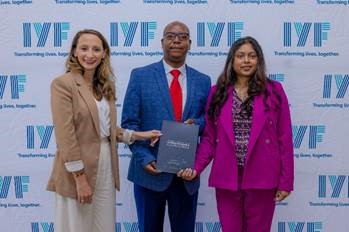
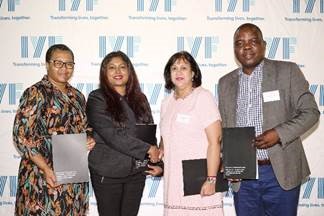
The research, conducted by JET Education Services under the direction of the IYF, was officially handed over by Naicker to DHET’s Chief Director of TVET Programmes and Qualifications, Aruna Singh, during the ceremony.

Singh made the important distinction that 4IR is more than just technology-driven change; it is an opportunity to help everyone, including leaders, policy-makers and people from all income groups and nations. Speaking on the significance of the research conducted, Singh reaffirmed that it is integral to understand that the digital revolution is intrinsically connected to unemployment, education and job creation in South Africa.

DHET Deputy Minister, David Modiba, noted the knock-on effect the implementation of this research could have, highlighting how a strengthened ICT sector would undoubtedly benefit South Africa’s economy, positioning the country as a competitive force in the industry.

The IYF has worked closely with TVETs and other tertiary institutions for many years, and this is just another important step in the foundation’s quest to strengthen the PSET system and create more sustainable avenues of employment for graduates. Most notably, the IYF’s “Skills for Success” programme, in collaboration with Google.org, is giving students across Africa the opportunity to complete the Internationally recognised Google Professional Career Certificates. Singh highlighted the efficacy of this project noting that since the project’s inception in 2021, over 600 students have successfully graduated with about 70% of graduates securing employment.

The Fourth Industrial Revolution (4IR) is not a constant. Instead, it is constantly evolving. At the rate of global technological and digital development, the overall employment landscape is set to change drastically year by year. According to the World Economic Forum, 65% of children entering primary school today will end up working in completely new jobs that don’t exist yet. The research handed over not only outlines a practical way forward, but prepares the existing landscape for continued radical change in the ICT sector.

While MICT SETA already plays a pivotal role in funding 4IR initiatives, the new roadmap details how the IYF, DHET and TVETs can better leverage off the entity’s funding processes in order to ensure financial feasibility for both students and the colleges themselves. In the months following the handover, IYF and its partners are already in the process of securing funding to execute the models suggested, and value the continued support of SETAs in ensuring the model becomes a reality.

Prior to the handover, JET Education Services CEO, Dr. James Keevy, thanked the IYF for its initiative and praised the foundation’s contribution to positively shaping the future of South Africa’s PSET system and subsequently, the prosperous evolution of the country’s ICT sector.

Ultimately, the research conducted will allow the IYF to better leverage its existing partnerships, secure mutually aligned collaborators, and action the necessary logistical and economic processes that will contribute to strengthening South Africa’s Digital and IT sector.

END

For daily insights on IYF SA

Follow us on Facebook : IYFSouthAfrica

Follow us on Instagram : @iyf_sa

Follow us on LinkedIn :  IYF South Africa

Visit: www.iyfsa.org

Healthy early development boosts successful adulting

The importance of healthy development in a child’s early years is seldom disputed – but often the extent of how dramatically it impacts children’s futures is not readily understood. According to Harvard University’s Center on the Developing Child, it goes so far as to state that healthy early development “provides the building blocks for educational achievement, economic productivity, responsible citizenship, lifelong health, strong communities, and successful parenting of the next generation.”[1] In other words, every aspect of an adult’s life.

With this in mind, what then are the key areas that need to be taken into account when considering the healthy development of a child through their foundational schooling years, from Grade R to Grade 3?

In selecting a school for their child, the first steps parents should take is to assess whether their own values are aligned to the values of the school, and whether the school encourages parents to be partners in the team that is helping the child to learn and grow.

It’s also important for all caregivers – parents and educators – to understand that no two children are alike, and that each child is on their own learning journey right through their developmental stages.

Having said that, there are some generalities that can be related to each child’s development that we will explore further.

A child’s mindset relating to values, attitudes, relationships, and behaviours develops in the foundation phase. At this stage, they must be supported to meet the developmental requirements of each grade, including learning to read and write, count and reason. And possibly more importantly, they need to learn to share, take turns, work as a member of a team as well as independently, ask for help when needed, ask and answer questions, understand differences and not just tolerate them, and be prepared to be brave about trying something new without fear of failure.

The foundation phase is also a child’s first introduction to learning phonics and developing good number sense. Here, experience has shown that a multi-sensory approach to teaching these basics will ensure that all children are able to benefit from the learning; that one or other of the activity will resonate with their learning style. Throughout this approach, children are listening and speaking, feeling, building, categorising, comparing, and developing an understanding of what they’re learning. When this is carried through into the home as well through exploration and conversation, the school teaching is supported and enhanced.

As a foundation phase educator and parent of two boys, I have found that children are most engaged when they feel connected to what they are learning. In this way, giving them a voice, including them in the learning process, and making use of project-based learning ensures that they have fun and enjoy the process of learning to investigate, reflect, and collaborate – all of which are valuable life skills.

Taking this development into account, The Ridge School is a boys-only primary school from Grade R to Grade 7 which enables boys to engage actively in a boy-centred environment, while developing their academic skills alongside their ‘soft’ skills (people and communication skills, character, attitudes). At The Ridge School, we encourage parents to consider a boys-only school for their sons because boys and girls tend to mature at different rates. This means that the boys can be themselves with less concern about judgement, the teacher can manage the classroom environment that best serves boys’ needs, and the boys learn to be more confident. In this way, a sense of ‘brotherhood’ grows which creates a sense of belonging and connections that often last a lifetime.

Regardless of which school parents choose to send their child to, a key factor to remember  is that the early years of a child’s development are critical to their future success. There is much that can be done both in the school and home environments that can contribute positively to this journey.

For more information about The Ridge School, visit www.ridgeschool.co.za

ENDS


[1] https://developingchild.harvard.edu/resources/three-core-concepts-in-early-development/

Business school shows competitive edge in alumni employability

In a job market that is challenging, business school be committed to providing an innovative and integrated approach to higher education that prepares graduates to succeed in the 21st-century workplace. With a student population composed primarily of mature working adults, Regent Business School (RBS) offers a range of initiatives and resources designed to ensure success and increase employability.

Stats and students that speak for themselves

In a recent employability report released by RBS, 80% of their students reported being satisfied with the institution, and 93% agreed that the education received at RBS met and exceeded their job requirements. Furthermore, 87% of their alumni were employed at the time of the survey, with many in top management roles such as Managing Directors, CEOs, and Directors of blue-chip companies. These statistics demonstrate the effectiveness of a 4IR approach to higher education in preparing graduates for positive outcomes.

Alumnus Reece Oakes, CEO at Rennie’s BCD Travel had this to say after completing a Master of Business Administration: “I commenced my MBA whilst in the role of Head of Front-End Services at African Bank. The MBA through Regent was key in opening career doors and is a force to be reckoned with. I was blessed to be offered the opportunity to commence the Regent DBA with the first group intake at the start of 2021.”

Margaret Hirsch, COO of Hirsch’s completed a Master of Business Administration later on in her career: “It’s quite intimidating when you haven’t studied for a long time, but I must say that Regent Business School made me feel comfortable and were on-hand to be able to help me with any questions I had. I appreciated the lessons which took place on weekends which meant they did not interfere with my work schedule.”

Education that is 4IR driven

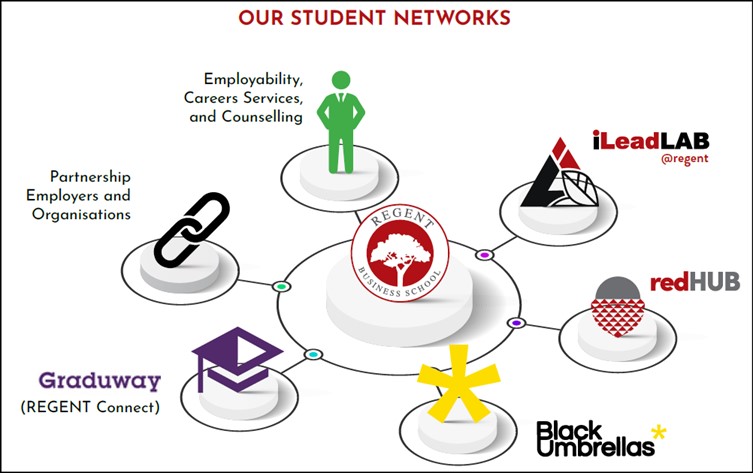
Top business schools should place a strong emphasis on developing employability skills in its students. Skills such as communication, problem-solving, teamwork, and time management give graduates an edge in a competitive and complex job market. Employers are increasingly seeking candidates with these 21st-century skills, which are an integral part of Regent Business School’s online curriculum and academic integration programme. This programme allows for the creation of partnerships with employers and industry leaders, providing practical experience and professional networks for students.

Dr. Ahmed Shaikh, Managing Director of Regent Business School, emphasises the importance of disrupting, rethinking, and innovating to ensure that alumni have the edge when it comes to employability. “We are committed to preparing agile leaders with an entrepreneurial mindset,” says Dr. Shaikh. “Our innovative approach to higher education focuses on developing employability skills and creating partnerships with employers and industry leaders. This ensures that our graduates are well-equipped to succeed in the 21st-century job market.”

A forward-thinking and comprehensive approach to higher education ensures effects employability in a meaningful way which should encompass:

  1. Flexible and accessible distance learning
  2. Transversal skills training for mature working adults
  3. 21st Century skills training for the modern workplace
  4. Dedicated and personalised career support
  5. CV review, academic counselling, career guidance, mentoring, and a job portal

Resources that stand out

Regent Connect is a valuable platform exclusively for RBS alumni that provides access to a wide range of resources and opportunities to help advance their careers. With approximately 11 000 alumni active on the platform, Regent Connect offers a wealth of information, including job postings, career advice, and tips on how to improve resumes and interview skills. This platform provides a distinct advantage when searching for employment and navigating the corporate world. By leveraging the knowledge and experiences of fellow alumni, Regent Connect creates a supportive community that fosters growth and professional development allowing alumni to stay connected and excel in their careers.

To further support student success, Regent Business School has collaborated with over 50 diverse employers and industries. These collaborations enable students to gain practical experience and build professional networks, enhancing their employability and career prospects. The emphasis on innovation and entrepreneurship also prepares students to become agile 4IR leaders and entrepreneurs through reskilling and upskilling.

An on-going commitment to student success and employability is reflected in the opening of a dedicated career centre which can be utilised by RBS students and non-students alike. This initiative results from Regent Business School’s association with the Honoris United Universities and will provide access to career development resources and support, further enhancing their employability and career prospects.

This integrated approach to higher education, with a strong emphasis on developing employability skills and creating partnerships with employers and industry leaders, ensures that all graduates are well-equipped to succeed in the 21st-century job market. With a focus on innovation and entrepreneurship, Regent Business School prepares agile 4IR leaders with an entrepreneurial mindset, giving them the edge when it comes to employability.Become future ready by joining one of accredited MBAs, postgraduate qualifications, degrees, diplomas, or higher certificates! All 2023 students will receive a free Management Development Programme valued at R7000. T’s & C’s Apply.

Bambanani – creating a better future for children through education

Afrika Tikkun Bambanani is the coming together of Afrika Tikkun and Bambanani Sifunde to form a group of ECD Specialists who implement a standardised ECD curriculum in rural underprivileged schools.

Johannesburg, Thursday 20 April 2023 – At the launch of the BambaLearn App by Afrika Tikkun Bambanani (ATB)last night, expert insights were shared around the upskilling and training of teachers required to assess and monitor learner development. Simultaneously the programme is designed to facilitate teacher progression equipping them to screen for learning difficulties and arrange intervention, provide psychosocial support and monitor child growth and progress. The BambaLearn App aims to extend children on the curriculum ensuring that no child is left behind.

“The period from birth to six years old is the most vital stage of brain development for children and these informative years represent a crucial window of opportunity for education. The ATB programme is developed to ensure early childhood care and education that is truly inclusive. It is much more than just preparation for Grade 1, ECD is the foundation for emotional wellbeing and learning throughout life; and is one of the best investments a country can make as it promotes holistic development, gender equality and social cohesion,” shared the passionate ATB programme CEO, Theresa Michael.

Afrika Tikkun Bambanani’s Mission & Vision

To reach as many children as possible aged birth to six years of age across all rural and underprivileged communities of SA and to provide play-based learning through trained ECD teachers who will build a solid foundation for their education and overall wellbeing. The long-term vision is to standardise the ECD curriculum throughout SA to ensure that no child is left behind in terms of education which will lead to equal opportunity for all children in SA.

Afrika Tikkun Bambanani’s Impact

Currently 800 upskilled practitioners working in 200 Early Learning Centres in disadvantaged communities and underprivileged rural areas are providing a solid foundation for 10 000 children through this initiative.

ATB aims to provide a safe, nurturing and stimulating environment for South African children and invest in their education by providing them with the tools they need to succeed. Early childhood education has a positive impact on our society as a whole; helping reduce poverty, promote economic growth, and decrease the likelihood of negative social outcomes such as crime and substance abuse.

What does Afrika Tikkun Bambanani offer?

  • ECD Curriculum age 0-6 years
  • Teacher training
  • Resource kits
  • Data-free online assessment centre to monitor student and teacher progression
  • Data-free online screening tool assessment for children
  • In-class teacher training and mentorship
  • The BambaLearn App for children from 2-6 years old

How does Afrika Tikkun Bambanani work?

The three-year ECD programme is presented as a customised ATB package to suit the needs of each centre/community. It includes a five-day teacher pre-training programme, monthly up-skill teacher training, online curriculum, printed manuals and workbooks, online assessment centre and in-class mentorship.

Registered as part of the Afrika Tikkun brand, the ATB training, assessment and curriculum programme has brought together a team of ECD practitioners, theorists, educators, investors and therapists to create the best ECD curriculum available in South Africa and make it available to ECD practitioners and children living in under-resourced communities around South Africa. The programme readily collaborates with government and private sectors.

Early Childhood Development (ECD) is the period spanning from birth until the year before a child enters formal schooling. Research shows that children who do not have access to adequate ECD are more likely to struggle academically and have lower earning potential as adults, and they are also more likely to engage in risky behaviours, such as substance abuse or criminal activity. Furthermore, the effects of inadequate ECD can have an intergenerational impact on children, in that they are likely to struggle as parents themselves, trapped in a perpetuated cycle of poverty.

Sadly, the highest failure rate in South African schools occurs in Grade 1. Investing in ECD can lead to better school readiness, improved academic achievement, higher earning potential, and better health outcomes in adulthood. Additionally, a nurturing and supportive early childhood environment can promote positive social-emotional skills and behaviours, which can lead to stronger relationships and increased well-being throughout life.

We can change the trajectory of many young children currently at risk if we equip ECD practitioners with the skills needed to deliver quality early learning programmes that meet children’s developmental needs.

Many ECD centres in under-resourced communities are not able to employ qualified practitioners, and although a lot of their staff do have years of working experience, they do not have the formal training to design outcomes-based programmes. To support these centres, we have developed an innovative and comprehensive ECD curriculum that is designed to meet the developmental needs of children aged one to six years, which can be implemented by ECD practitioners who have little or no formal ECD training.

The key activities to support participating ECD centres to implement a quality ECD programme include:

  • Developing an outcomes-based ECD curriculum that provides the framework for children aged one to six years to meet their developmental milestones and equip them with the skills needed for future academic success.
  • Providing the ATB curriculum to participating centres in the form of printed manuals, workbooks, theme posters and assessment portfolio files. An online version of the curriculum is also available.
  • Offering off-site training to ECD practitioners and principals up-skilling them to implement the ATB curriculum, as well as outcomes and teaching methods.
  • Providing in-classroom training and mentoring for the first three years of implementation.
  • Monitoring and assessing practitioner progress through online teacher progression assessments and monthly tasks they are required to upload. Any gaps identified will be addressed by our trainers through offering additional training sessions, as well as on-site implementation support.
  • Using tracking sheets to assess the termly progress of all children aged one to six years who are in the programme.
  • Providing the schools with screening assessments tools for children aged six months to six years.
  • Providing ongoing support through site visits from year 1, and into year 3.

These activities are supported by two innovative technologies, thereby removing geographical limitations as any ECD centre with internet can access the programme.

1.           Learner Tablet App – BambaLearn (Data Free)

BambaLearn is an app that allows young children to develop their critical thinking and to reach their milestones through play. Created by experts, designed for (and loved by) children ages 2-6 years, this app ensures that age-appropriate milestones are reached through rigorous performance monitoring through games. These include a wide variety of educational puzzles, story books, numeracy activities, problem solving games, literacy, shapes, tracing, counting, letter and number recognition. This app ensures that no child is left behind by enabling stronger learners to work ahead and providing extra revision and repetition for weaker learners.

2.           Afrika Tikkun Bambanani Assessment Centre (Data Free)

The goal is to improve and standardise the ECD content in our nation’s ECD centres, empowering practitioners to spend more time with the children. The ATB assessment centre ensures that no child or teacher is left behind. ATB provides tracking sheets and termly reports to monitor learner progression, focusing on critical developmental milestones, screening tools to red-flag learners that require intervention, and practitioner tracking and evaluating.

A state-of-the-art remote upload portal allows us to assist and observe our learners and teachers, especially schools in remote areas. ATB’s online trainers assess and report on all activities and video tasks assigned to the practitioner for the week.

The potential of millions of young children is lost due to our inability to provide families living in marginalised communities access to quality early childhood education programmes. ATB’s vision is to uplift the lives of our children and improve the quality of ECD teaching in South African to reach remote and disadvantaged communities and ECD centres with the knowledge and resources needed to implement an effective ECD curriculum, changing the trajectory of thousands of young beneficiaries of this programme.

What makes Afrika Tikkun Bambanani different is their approach to sustainability. The Sustainable Development Goals (SDGs) and Environmental, Social, and Governance (ESG) goals aim to promote sustainable and responsible practices, with the SDGs addressing a wider range of development issues on a global scale, and ESG goals focusing on the environmental, social, and governance factors of companies and organizations. The underlying value of the ATB programme is to “leave no child behind”, and in so doing supports several SDGs, including:

  • SDG 1 (No Poverty): Effective ECD programmes can break the cycle of poverty by improving children’s development, health, and learning outcomes, which ultimately leads to better employment opportunities and higher incomes in adulthood.
  • SDG 4 (Quality Education): This ECD programme has been designed to prepare children for school and lifelong learning by providing high-quality early learning experiences, such as language and literacy development, social-emotional skills, and critical thinking.
  • SDG 5 (Gender Equality): As inclusivity is one of ATB’s priorities, the programme aims to address gender inequality by providing equal opportunities for boys and girls to learn and develop, addressing gender stereotypes, and empowering parents to support their children’s education.
  • SDG 10 (Reduced Inequalities): This programme can be adapted to include all children, including those living with disabilities, and has been designed to be relevant to all children, including those from poor households, in the spirit of “leave no child behind”.

ATB are looking at how to link their centres to their health and psychosocial programme, which focuses on nutrition, psychosocial intervention, eye screening and audio screening, Once this is included, ATB will also be supporting SDG 3 (Good Health and Wellbeing).

Afrika Tikkun Bambabani Curriculum Overview:

Play-Based Learning

A play-based programme which nurtures vital life skills including social, emotional and cognitive development. This enhances the whole child by providing the self-confidence required to explore new environments and experiences.

Broad-Based Curriculum

A curriculum based on an eclectic education system which combines knowledge from multiple disciplines and educational theorists that is developmentally appropriate. The approach encourages children to think independently, with the emphasis on teaching a child how to think, rather than what not to think.

Child-Centred Approach

The approach is child-centred, ensuring children play an active role in the classroom. Children are encouraged to share their thoughts and ideas, enabling them to learn from each other.

Measurable Results

The assessment model monitors key learning areas like cognitive, physical, and social-emotional development. These skills are continuously assessed through ATB’s tracking sheets and screening tools.

Unfortunately, many children in rural communities lack access to the resources they need to succeed academically. That’s why ATB is reaching out to corporations and individuals to join them in their mission to close the education gap.

Through sponsorships, it becomes possible to work together to provide early learning centres with the resources, curriculum, and training necessary to give children the best possible start in life. This ‘Adopt-an-Early Learning Centre’ will make a meaningful difference in the lives of countless children and help create a brighter future for all.

Corporations and individuals are invited to join ATB in this effort by adopting a learning centre enabling ATB to ensure that children have access to the education they deserve. Together, we can make a positive impact on the lives of children and help build a more equitable society.

For more information about Afrika Tikkun Bambanani or to find out how you can donate to the programme, please visit https://afrikatikkunbambanani.org/


People and communities at the heart of Empact Group’s CSI initiatives

Empact Group’s Corporate Social Investment strategy determines to articulate the Group’s commitment in making people and communities part of its bottom-line.

In accordance with the group’s CSI policy, Empact recognises donations and sponsorships as an expression of their corporate social responsibility towards the environment and the communities in which the business operates. The charitable objectives support the group’s CSI and sustainable development strategies that focus on:

•             Environmental practises

•             People development

•             Community engagement

“It is the cumulative transformation of the hearts of our people and the burning desire to make the world a better place for everyone that fuels our beneficiary development initiatives. As a business that is wholly owned by Thebe Investment Corporation, we are proud to leverage off of Thebe’s legacy as a pioneering black-owned company in becoming an engine of the community.” explains Empact Group CEO, Alan Quinn.

Therefore, Empact’s partnership with Thebe is the cornerstone of their collaborative effort in making donations to charitable organisations which share their vision, mission and most importantly, values. Continuing this ethos, the composition of the company’s CSI commitments aligns to assist and catalyse the strategic interventions that address the relevant socio-economic challenges of the communities Empact operates within. Their level 1 BBBEE scorecard echoes the resonant duty of the business in making an impact towards an inclusive, transformative, and sustainable South Africa.

Together with the Thebe Foundation’s charity network Empact Group has journeyed together with three non-profits whose social contributions towards communal and individual welfare within their respective communities resonate with the country’s most urgent social issues. The contributions and social interventions of these non-profits align with Empact’s own business ethos of caring for their people as a responsible, purpose- and service-led business.

Maths Centre

“Education is the most powerful weapon which you can use to change the world.” – Nelson Mandela

Nelson Mandela, South Africa’s beloved statesman, believed that education was one of the most effective means of transforming the world. With this in mind, the purpose of Nelson Mandela Day is to inspire the youth and the next generation of leaders to take on the responsibility of leadership in addressing the social injustices prevalent in our communities.

The Maths Centre is committed to highlighting the importance of mathematics, science, technology, and entrepreneurship in education. It is crucial to establish that mathematics and science should spearhead the most advanced, up-to-date, and most relevant development of disadvantaged children ensuring a level playing field within maths and science related fields and disciplines. The Maths Centre further develops their competency and performance in these curriculums from Grades R to 12 in South Africa.

Empact Group believes in the strategic investments in the future leaders of communities and identified Maths Centre as a relevant partner. Through our involvement and investment, Empact recognise the pivotal consequence education has on our communities and ultimately the economy.

Tears Foundation

Founded in 2012, Tears Foundation is a non-profit and public benefit organisation that uses technology innovatively in the scourge against domestic violence, sexual assault, and child abuse. Among the future plans of the Tears Foundation, is a focus on strategic primary prevention interventions to curb GBV. These include community and school education programmes that seek to create gender-equitable environments and address the issues of GBV amongst young people and eliminating the disrespectful portrayal of women.

On Women’s Day in 2022 Empact Group partnered with the Tears Foundation to become a business that is better positioned in assisting the non-profit in providing access to crisis intervention, advocacy, counselling, and prevention education services for those impacted by domestic violence and other forms of GBV.

Responsible corporate practice underpins Empact’s model to be a socially accountable organisation when it comes to citizenry. Understanding the social plights of our communities, is one of the pillars of the group’s CSI Strategy.

LIV Village

The healthy development of children is crucial to the future well-being of any society. LIV Village provides residential care for orphaned and vulnerable children placing them in a family environment with a trained foster mother to love and care for them.

Empact Group’s CSI strategy is committed to underpinning the LIV Village’s efforts to support the millions of orphaned and vulnerable children in South Africa through the network of LIV Villages located in various parts of the country.

This partnership with the LIV Village has enabled Empact to make meaningful monetary contributions and donations annually towards the urgent social needs of housing children who need homes.

The collective impact of Empact Group as a business reinforces the company’s CSI framework and commitment towards achieving sustainable developmental objectives. Communities are the cornerstone of our business and people are at the heart of what Empact Group does.

Emmanuel Madzunye, Senior Software Development Lecturer at redAcademy is on a mission to uplift and change the lives of youth in the tech industry

CAPE TOWN – From a small boy in a village in Limpopo to one of the most recognisable names in the IT education space, Emmanuel Madzunye, Senior Software Development Lecturer at redAcademy, is driven by a singular purpose: to change and uplift the lives of young people so that they may go out into the world and do the same for others.

“If I look back over my life,” says Madzunye, “I remember moments that set me on a path to achieving my dreams. These moments were fundamental in me achieving what I have, being a senior lecturer at an innovative skills and experiential learning hub that specialises in teaching coding and technology skills, while also completing a doctorate in IT. All those years ago I started as a boy who didn’t even know how to turn on a computer! It is a great accomplishment but one that would not have been possible without important figures who changed my life. It is my passion to pay this forward,” he says.

redAcademy collaborates with South African businesses facing a massive skills gap in the country to build a sustainable tech talent pipeline for the future. Madzunye says it was easy to choose redAcademy as they share a common purpose. “redAcademy is giving young people an opportunity to change their lives. I wanted to assist these young people who are being given this chance, to guide them to make the most of the incredible opportunity,” he explains.

Madzunye says that when he left school IT was synonymous to a computer, nothing more. After travelling to Tshwane to start studying, a lecturer at TUT introduced him to another type of IT, one that held the promise of opportunity, one that makes lives easier and solves important problems. The seed was planted. Against all odds, he completed a diploma at TUT while also being a successful tutor, drastically improving the pass rate which had been very low. This is where the seed of lecturing IT was born.

“I was interviewed to lecture first year students on the condition that I completed a B-Tech degree at TUT. Within a few years I had done my masters and now I am reading towards my doctorate. I’ve worked with TUT, CPUT, Rosebank College, Damelin and Unisa. In fact, I jumped on board with Unisa with their online courses all the way back in 2012 and only stopped recently to give everything to redAcademy and our students, which we call Sprinters,” he explains.

Madzunye, who is warm by nature and always up for a laugh, is also serious about excellence. “Back when I was studying my family, who came from a difficult background, always made a plan to enable me to study. Knowing this fact pushed me, and this sits with me until today. Of course, I encourage laughter and fun, but expect 100% commitment and accountability from others as much as I expect it from myself.”

Zoning in on his passion, and purpose in life, Madzunye says there are areas in the country where the digital divide risks keeping talented and dynamic people out of the IT industry. “I always use any opportunity I get to share the gift of IT and career advice to people who don’t have that institutional memory to fall back on.”

He says that seeing eyes light up inspires him. “It started during my tutoring days and continues now at redAcademy. There is beauty in seeing someone start from a base of nothing, and then go through moments of clarity to the point where they become competent and good at software development. It is indescribably rewarding.”

When asked how he ended up in Cape Town with redAcademy, Madzunye says the methodology of teaching on the job, as it were, is one of the most effective ways to fast-track IT careers, and that this attracted him to join the academy. “Theory is obviously important. But imagine I gave you all the theory about how to drive a car. Would you just be able to climb in and drive? There’s no better learning than doing, and so the experiential learning we do at redAcademy literally sprints young people to being career-ready because we match theory with real-world practice, on real projects, in real businesses.”

The experiential learning he refers to is the methodology where redAcademy teaches young people only the relevant and up-to-date coding languages that are in demand in the workplace today, and then immerses them in live projects at businesses, alongside seasoned IT professionals.

When asked what legacy he would like to leave behind, Madzunye answers by citing examples from his life: “Sometimes I get tagged into a LinkedIn post, or bump into former students, and when they tell me about how they’ve progressed in their IT careers thanks to the start I gave them, it makes me immensely proud and happy. As long as I can keep changing lives through lecturing, mentoring and exposing young people to IT, I will be doing what I was born to do.” 

ENDS/

Mrs South Africa finalist aligns herself with two NPO foundations

Captions – girls being measured and receiving bras from the Impilo Foundation collection and Terisa Hsu-Lee with members of the Jessica Matheson Foundation Glorious Ngwenya, Terisa Hsu-Lee, Steven Matheson and Whitney Bryant.

Mrs South Africa finalist aligns herself with two NPO foundations

Terisa Hsu-Lee, a Kyalami resident, mother, and business owner, has been chosen as a semi-finalist for Mrs South Africa 2023. Her resume includes being a Fourways passion-preneur and the owner of Ever Beauty SA Emporium located in the Pineslopes shopping center. Hsu-Lee was informed of her selection last month following the National Casting event at Emperors Palace in Johannesburg. The semi-finalists participated in a two-day conference with motivational talks, workshops, upskilling sessions, socialising, networking and were introduced to the Mrs SA sisterhood.

Mrs South Africa is a self-discovery and empowerment programme that highlights diversity, ambition and confidence. It showcases some of the country’s most remarkable and talented women and equips them with the skills and tools necessary to achieve their dreams.

Hsu-Lee expressed her appreciation, stating that it was an honour to be a part of a platform that aligns with her personal values and passions. The programme is designed to empower married women and the CEO of Mrs SA, Joani Johnson, is proud to work with so many strong, inspirational and formidable women. The programme teaches leadership, entrepreneurship, marketing, self-promotion and self-discovery to ensure that all participants have a life-changing experience.

Mrs. SA received an impressive number of high-quality entries this year. The panel was looking for women who are interested in empowering others, who display strong family values and are passionate. Johnson notes that the National Casting day was challenging as so many of the entrants had what it takes to make a success of the programme.

Hsu-Lee’s decision to join the pageant was inspired by experience she gained as a cast member in an international reality TV show franchise and is now dedicated to using tools that she has acquired to bringing self-love and self-worth to the masses. Her mission is to teach people that the cars we drive, the brands we wear, our sexual and racial identities, addresses, education and titles do not define us. Instead, our self-perception is what truly defines us, and she aims to help people to strive to living a harmonious way of life.

This year Terisa is working very closely with two NPO foundations, Impilo Foundation and the Jessica Matheson Foundation.

Impilo Foundation believes in uplifting and empowering victims of Gender-Based Violence and Femicide (GBVF)through various social projects, such as #EmpowerHER bra drive, an initiative which empowers and restores dignity to young girls. Impilo Collection Foundation was alerted to the need for quality bras for women in need and teenage girls who cannot afford their first bra and due to their changing bodies are often objectified. Bras collected are donated to women and girls facing these challenges in impoverished communities as well as to women’s shelters around Gauteng.

Terisa was also approached by the Jessica Matheson Foundation to be their official spokesperson. 16 year old Jessica Matheson suffered from bioplar disorder and committed suicide on the 20th April 2022. In her memory the Foundation is working towards having a counsellor or social worker available at every government school to deal with depression, anxiety, drug addiction and other mental illnesses affecting school children.

Terisa Hsu-Lee fully embodies the values that Mrs SA holds most dear and is representative of our tagline for the year: #EveryWoman. We look forward to going on this journey with her and her fellow sisters,” concludes Johnson.

Be sure to support & follow Terisa Hsu-Lee’s journey on her social media profile @terisahsulee.

Give Terisa the support to make it to the finals by following her on social media @terisahsulee & @mrs_south_africa  the Mrs South Africa Instagram and Facebook page, find, like & comment on her photo & also sms Terisa Hsu Lee to 47587, you can vote as many times as you like. (R3/sms)

Share her posts, comments with her hashtag #terisaformrssa & tag below #mrssa2023

Ends.

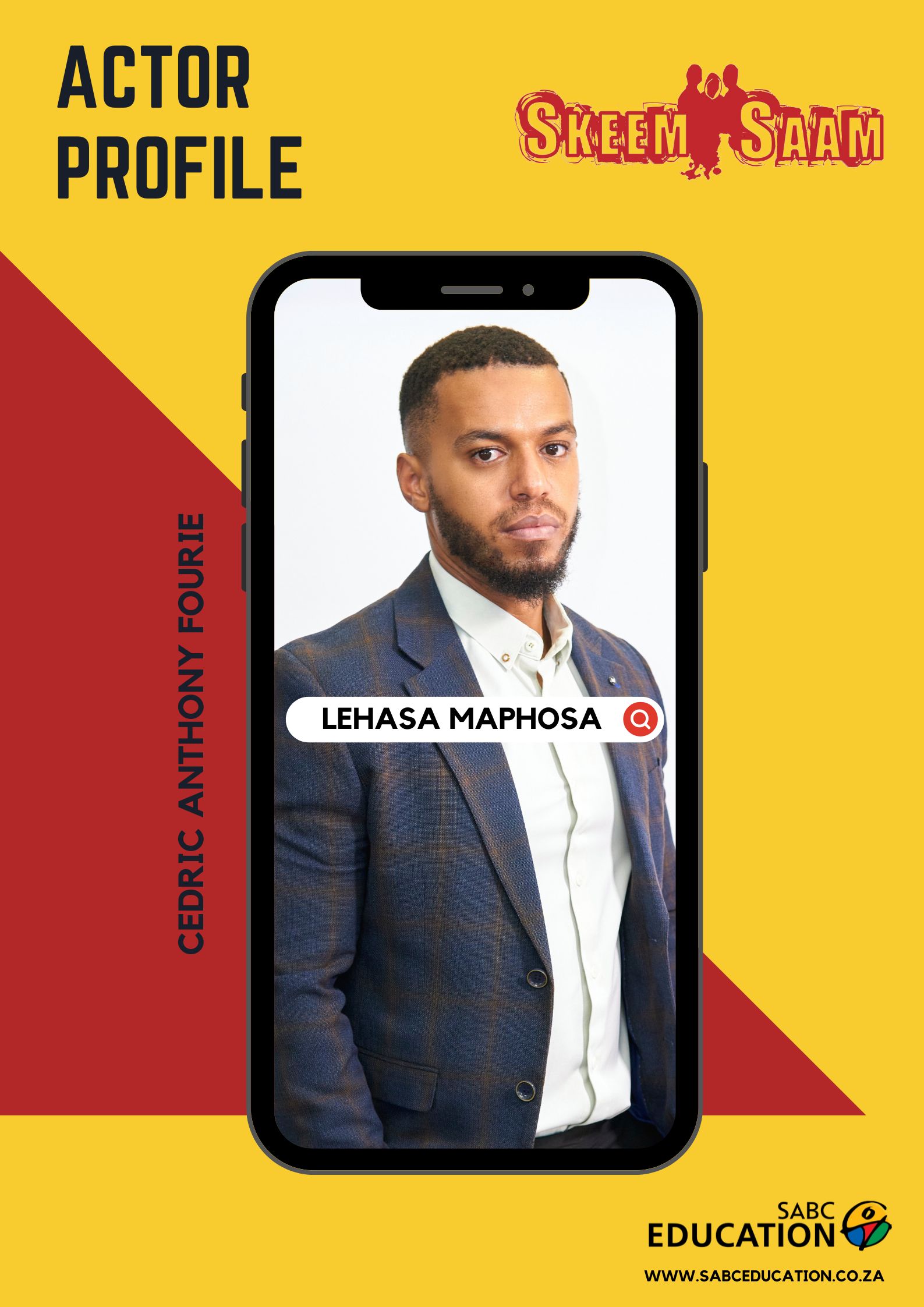
Cedric Fourie

Cedric Fourie

Cedric Anthony Fourie was born and raised in Orlando Soweto by a single mother. He attended multiple schools. Among them Greyville Primary School, Princess Primary School, and later joined Athlone Boys for his high school studies. He got a bursary and later on graduated from the University of the Witwatersrand and started to work as an engineer in networking.

His early career accomplishments were networking engineer roles at leading mobile firms among them Ericcson, Huawei Technologies, and Mobax Group. Even with his technical knowledge he could not resist his passion for arts and performance. He started attending auditions and as a result took cameo roles in prominent shows including Sokhulu & Partners, Harvest, Generations, and Isibaya. But, his career really blossomed when he landed the role of Lehasa Maphosa, during the 5th season of Skeem Saam. He is nothing like character of Lehasa Maphosa. He says in his own words “I share one or two similarities with Lehasa, but not everything! He’s a business man and can be very manipulative to get his way, but I’m not like that”, says Cedric.

 Lehasa Maphosa has had a roller coaster of a life these past few months.  After getting engaged to Khwezi on a lavish Valentine’s Day last year, he realised that he was still in love with an old flame that came in the form of a ‘Pretty’ lady. After Khwezi caught the two of them red handed getting a little too cozy for her liking she saw red and stabbed Lehasa in the chest, leaving him in a fatal condition. Thankfully he had since recovered, and shortly after needed to stand trial for Fanie’s murder, of which he received a not guilty verdict.   Amidst all of this, he also discovered that Khwezi was pregnant with his child and he was finally going to be a father. Something that he has always wanted.

Now that his wish of being a father to baby LJ has finally come true, we wonder if he plans to change his cunning ways any time soon.       

Find out on #SkeemSaam  every weeknight on SABC1 at 18.30pm and Omnibus every Sunday mornings from 9.30.

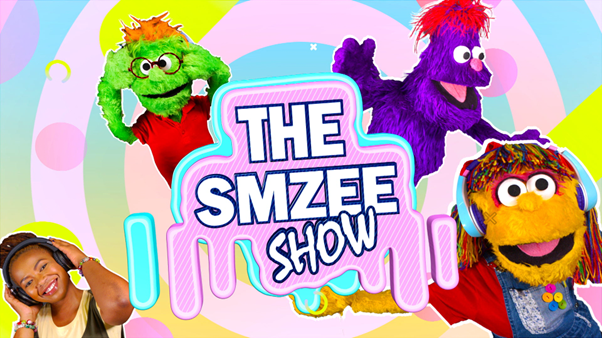
The SMZEE Show

The SMZEE Show is a fun and interactive radio station run by Muppets: Zee – our 6 year old muppet DJ, is well known for her electric personality and magnetic smile.  Musasa – 8 year old muppet DJ whose personality is a little more introverted but wise beyond his years, he knows far more than his zany personality often lets on. Mmangwane – our studio co-host who carries a magical bag filled with storybooks, puzzles and other mystery items that she uses to expand the kids imagination. Brainzy the computer – has answers and facts to all questions big or small, from plants to ants, numbers and animals. Then we have Simoo – our roving reporter who travels across the country finding different interesting places and meeting different friends. He has first-hand experience of the place he is visiting and learns about various cultures and traditions, how things work, different foods, new songs and always a dace move or two. Our vibrant in studio hosts and roving reporter keep our listeners enthralled and entertained with their bubbly personalities, fun and games while learning through play. The SMZEE Show stands for Simoo, Musasa and Zee.