THE IMPACT OF SOCIAL MEDIA ON TEEN DEVELOPMENT

In a world filled with digital connectivity ,social media plays a big role in shaping the lives of our teens. From friendships to self-esteem, the virtual world is intertwined into the life of a teenager.
The invention of social media has transformed the way teenagers navigate their formative years. TikTok, Instagram and Snapchat are not just apps, they are alternate dimensions where friendships are forged, identities are shaped and self-expression takes Centre stage.
The developmental stage of our early years play an important role in building self-confidence. This phase can be challenging ,especially when hormonal changes impact physical appearance, leading teens to feel uneasy in their own bodies. Social media has the potential to intensify these challenges, offering them not only the chance to compare themselves with peers but also with people across the globe.
In a recent systematic review conducted in accordance with the Preferred Reporting Items for Systematic Reviews and Meta-Analyses Statement, a team of five reviewers delved into the relationship between social media and psychosocial development.
The review comprehensively explored 20research papers published between 2008and 2019, revealing a nuanced understanding of the subject. It acknowledged social media as a space for psychosocial development, recognizing both potential risks and benefits. The identified potential risks included excessive use, problematic comparison and cyberbullying associated with engagement on social media.
Beyond the academia, teenagers are grappling with a loss of focus not only in their studies but also in their sports and daily lives. The constant pursuit of attention in the virtual world, coupled with the race to post the first comment or receive the first like may contribute to an increasing detachment from the real world.
To unravel the realities of this digital world, I turned to the voices of the youngsters at my local high school.
One thing that is clear in my interviews is the consensus that social media is both a blessing and a curse. Thobi, a grade 12learner shares, “Instagram is where I connect with friends, but it’s also where I feel pressure to look a certain way.” As teens grapple with self-image, the digital mirror of social media often distorts reality, creating unrealistic standards.
In contrast, Kwezi, a grade 12 learner brings another perspective. “Social media opens a window to the world for us. We learn about different cultures, global issues and connect beyond our borders.” The digital world seems like a double-edged sword, offering both challenges and opportunities for teenage development.
To understand more, I spoke to Nandipha, an16 year old from Vosloorus who emphasizes the positive influence of social media on cultural exchange. “We get to share our traditions and learn from others. It’s a beautiful way to break down boarders.,” she says.
However, challenges persist. Mjakes* 18,raises concerns about the digital divide.
“Not everyone has access to the same opportunities online. It creates inequality among us.” He says. These young voices underscore the need for a deeper understanding of social media’s impact, considering the ways in which teenagers grow.
In the midst of so many platforms, the roles of parents becomes crucial. Talks with parents reveal a shared concern for their kids well-being online. According to the Kwezi’s mother, “In this digital age, staying involved in our children’s online lives is not just a choice; it’s a necessity.”
As these platforms struggle with issues of privacy and cyberbullying, the call for responsible regulation intensifies. Legislators, educators and tech companies face the challenge of creating a safe digital space that fosters healthy development.
In the realm of growing up online, the impact of social media on teen development is profound and intricate. The stories of highschoolers in the Gen X family unveil a narrative woven with both challenges and opportunities. As society grapples with the implications, the need for fostering digital resilience becomes very important. The future of teenage development lies at the intersection of virtual and real, demanding a balance between connectivity and introspection.
*Note: Mjakes is a pseudonym used to protect the interviewee’s identity.


Sources:
https://journals.co.za/doi
https://www.southafricaeducation.info/career-options/career-guide/
https://www.sacap.edu.za/blog/academic-articles/social-media-and-adolescents/
(O’Keeffe & Clarke-Pearson, 2011).
Istockphoto.com
Kwezi and Suping

Mzansi youth are focused on the prize and English is their means to it.

Most of the older generation consider “Ama2000” (as they are widely known) as rebellious, however through that rebellion, there’s a boldness and a sense of challenging the status quo. They seem to want to only focus on what benefits their future. These young people understand that the world is a melting pot of cultures with English managing to bring them seamlessly together. They are not at all against speaking their home languages but recognise that language – just like the world, is changing and English is their gateway into this new reality.  

English is the highest most spoken language in the world and according to StatsSA, the fifth most spoken language in South Africa. Regardless of its rank in the South African context, it is also the most preferred teaching language. This has allowed English to be a much-favoured language used among young people. Imagine a group of friends, one Indian – Gujarati speaking, one Black – Xhosa speaking and one White – Afrikaans speaking having a friendly conversation, their mode of language would be English as they come from different backgrounds and speak different languages. With English used at school and with friends, the home might be the only place to speak one’s home-language. What happens when one also speaks English at home even though they come from a non-English speaking family? I spoke to a few children who only speak English. Some may understand their home language, and some may not.

When asked why brother and sister, Aqeel and Ammarah did not speak Gujarati – a language native to their mother, they both stated that no-one spoke it a home. They also mentioned that their parents were responsible for teaching it to them but never did. They often hear their mother speak Gujarati to their grandparents and other members from mom’s side of the family. That’s it!

Sisters, Sihle and Siyambulela on the other hand can understand isiXhosa but cannot speak it. Although both their parents are Xhosa, they only speak English to their children. Sihle said she would like to learn isiXhosa and thinks she still has an opportunity to learn it from her parents. Siyambulela wants to learn isiXhosa as well but is currently preoccupied with learning Korean, even though her father isn’t happy with that decision. “I would like to live in South Korea and study to be a dancer. I know I can be a dancer [here] in South Africa, but I don’t want to stay here and deal with loadshedding.”, said Siyambulela sharing the same opinion as Tlholo who can fluently speak Sesotho but cannot write it. Although she can understand and speak Sesotho, she does not think it is necessary for every child in South Africa to learn their home language. She does not think that young people should burden themselves with learning a language they probably will not use in their studies or future workplaces.  Her plans include moving to Canada to study Criminal Psychology and feels that she will not need Sesotho for that.

According to New World Immigration, “[young] South Africans are giving up on their country of birth to explore options for a better future (safety and security) as migrants in a foreign country”. Unlike much of the older generation, these children have a desire to live, study and work abroad and do not consider language and culture to be vital to their current and future lives. I could somewhat agree with that sentiment that one needs to equip themselves with tools they will need in the future, such as learning the language of the country they plan to immigrate to.

What was clear from the children interviewed – whether planning on staying in the country or not, they did not associate their home languages with their culture. They felt they could still be proud Gujarati, Xhosa or Sotho without learning the languages. For them speaking their home language is simply for the benefit of the older generation. They could learn to speak them in order to communicate with their grandparents and other older family members.

Indeed, these young people made some valid points. The world is now made up of global communities who do not only belong to one culture. However, one cannot deny that our home languages are gateways into our culture, our essence – what makes us who we are. They are our point of contact with the people we belong with – our brothers, sisters, aunts, uncles, grandparents, our mothers, and fathers. They connect us with people we consider family without being blood related. Our home languages are our expressions without explanations. They are OUR MOTHER TONGUE.

GLOBAL ROWING REGATTA BREATHING NEW LIFE INTO ROODEPLAAT DAM

The World Rowing Masters Regatta 2023 has already made a lasting impact on Roodeplaat Dam and its surroundings before the start of the global showpiece on 21 September.

The infrastructure investment into the venue for the four-day global event will not only bring the water quality and the facilities up to international standards but will help improve the biodiversity in the nature reserve located on the shores of the Roodeplaat Dam.

The local organising committee, with the help of the Gauteng Provincial Government, Rand Merchant Bank (RMB), Balwin Properties, and Betway, has been working full tilt in delivering a world-class regatta since South Africa was awarded the hosting rights in 2019. 

From 2020 to mid-2022, dense mats of hyacinth covered the course, making the dam unrowable. Work to weed out the invasive aquatic plants involvedthe removal using pitchforks and nets. This helped control the invasive species and ensured that training and regattas continued at the dam.

In addition, the organisers needed to address poor water quality because of a lack of maintenance at the Zeekoegat  Waste Water Treatment Plant. They partnered with Blue Planet, who installed nanobubble technology to help oxygenate the water supply and are doing regular bioremediation treatment on the water. This has resulted in improvement in the water quality on the course and around the jetties. 

The banks of the dam have also undergone significant rehabilitation, including bank stabilisation and the planting of indigenous plants along the shoreline. 

Significant infrastructure investment has been made to the facility, including the installation of three new jetties, and blade racks. A security fence has been erected and the roads within the rowing facility have been paved. Improvements to the Roodeplaat clubhouse include refurbishments of the deck, toilets and kitchen, painting, waterproofing of the deck, a new boathouse, and new windows and doors. Venue water consumption has received attention with enhancements made to the water reticulation system reducing venue dependence on borehole water.

Hosting the first World Rowing regatta on African soil will not only give the sport a much-needed shot in the arm but will also ensure that Roodeplaat Dam takes its rightful place as a water sports hub in Gauteng. 

For more information about the 2023 World Rowing Masters Regatta, visit https://wrmr2023.africa.

Follow Us: Facebook

Contact Us: info@wrmr2023.africa

EVENT DIARY DETAILS:

Dates: 21 to 24 September 2023

Time: 8.30 am to 4.30pm (Thursday 21 to Saturday 23 September)

9.00am to 12.00pm (Sunday 24 September)

Location: Roodeplaat Dam


ABOUT THE WORLD ROWING MASTERS REGATTA

The World Rowing Masters Regatta caters to all rowers aged 27 and upwards is a club regatta that allows competitors to enter instead of qualifying for the showpiece through national selection nor do they represent their countries. The annual regatta has been held each year since its debut in 1974, except for 2020 due to the COVID-19 pandemic.

PARTNERS:

  • Gauteng Provincial Government
  • Rand Merchant Bank
  • Balwin Properties
  • Blue Planet 
  • G4 Civils
  • City of Tshwane

For media queries please contact annie@angelfishpr.co.za

Annie Hodes

083 325 4445

annie@angelfishpr.co.za

Emmanuel Madzunye, Senior Software Development Lecturer at redAcademy is on a mission to uplift and change the lives of youth in the tech industry

CAPE TOWN – From a small boy in a village in Limpopo to one of the most recognisable names in the IT education space, Emmanuel Madzunye, Senior Software Development Lecturer at redAcademy, is driven by a singular purpose: to change and uplift the lives of young people so that they may go out into the world and do the same for others.

“If I look back over my life,” says Madzunye, “I remember moments that set me on a path to achieving my dreams. These moments were fundamental in me achieving what I have, being a senior lecturer at an innovative skills and experiential learning hub that specialises in teaching coding and technology skills, while also completing a doctorate in IT. All those years ago I started as a boy who didn’t even know how to turn on a computer! It is a great accomplishment but one that would not have been possible without important figures who changed my life. It is my passion to pay this forward,” he says.

redAcademy collaborates with South African businesses facing a massive skills gap in the country to build a sustainable tech talent pipeline for the future. Madzunye says it was easy to choose redAcademy as they share a common purpose. “redAcademy is giving young people an opportunity to change their lives. I wanted to assist these young people who are being given this chance, to guide them to make the most of the incredible opportunity,” he explains.

Madzunye says that when he left school IT was synonymous to a computer, nothing more. After travelling to Tshwane to start studying, a lecturer at TUT introduced him to another type of IT, one that held the promise of opportunity, one that makes lives easier and solves important problems. The seed was planted. Against all odds, he completed a diploma at TUT while also being a successful tutor, drastically improving the pass rate which had been very low. This is where the seed of lecturing IT was born.

“I was interviewed to lecture first year students on the condition that I completed a B-Tech degree at TUT. Within a few years I had done my masters and now I am reading towards my doctorate. I’ve worked with TUT, CPUT, Rosebank College, Damelin and Unisa. In fact, I jumped on board with Unisa with their online courses all the way back in 2012 and only stopped recently to give everything to redAcademy and our students, which we call Sprinters,” he explains.

Madzunye, who is warm by nature and always up for a laugh, is also serious about excellence. “Back when I was studying my family, who came from a difficult background, always made a plan to enable me to study. Knowing this fact pushed me, and this sits with me until today. Of course, I encourage laughter and fun, but expect 100% commitment and accountability from others as much as I expect it from myself.”

Zoning in on his passion, and purpose in life, Madzunye says there are areas in the country where the digital divide risks keeping talented and dynamic people out of the IT industry. “I always use any opportunity I get to share the gift of IT and career advice to people who don’t have that institutional memory to fall back on.”

He says that seeing eyes light up inspires him. “It started during my tutoring days and continues now at redAcademy. There is beauty in seeing someone start from a base of nothing, and then go through moments of clarity to the point where they become competent and good at software development. It is indescribably rewarding.”

When asked how he ended up in Cape Town with redAcademy, Madzunye says the methodology of teaching on the job, as it were, is one of the most effective ways to fast-track IT careers, and that this attracted him to join the academy. “Theory is obviously important. But imagine I gave you all the theory about how to drive a car. Would you just be able to climb in and drive? There’s no better learning than doing, and so the experiential learning we do at redAcademy literally sprints young people to being career-ready because we match theory with real-world practice, on real projects, in real businesses.”

The experiential learning he refers to is the methodology where redAcademy teaches young people only the relevant and up-to-date coding languages that are in demand in the workplace today, and then immerses them in live projects at businesses, alongside seasoned IT professionals.

When asked what legacy he would like to leave behind, Madzunye answers by citing examples from his life: “Sometimes I get tagged into a LinkedIn post, or bump into former students, and when they tell me about how they’ve progressed in their IT careers thanks to the start I gave them, it makes me immensely proud and happy. As long as I can keep changing lives through lecturing, mentoring and exposing young people to IT, I will be doing what I was born to do.” 

ENDS/

Cedric Fourie

Cedric Fourie

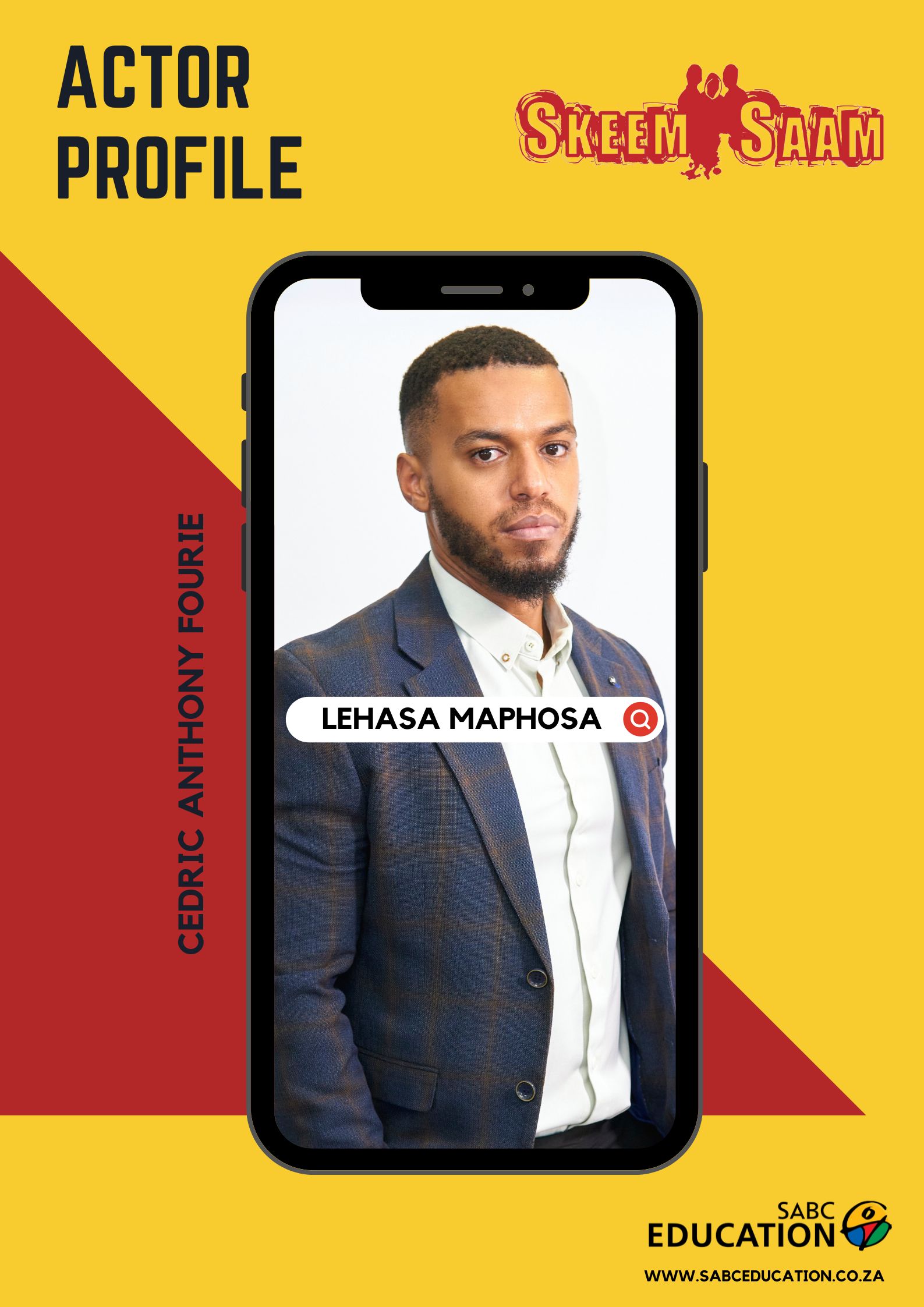
Cedric Anthony Fourie was born and raised in Orlando Soweto by a single mother. He attended multiple schools. Among them Greyville Primary School, Princess Primary School, and later joined Athlone Boys for his high school studies. He got a bursary and later on graduated from the University of the Witwatersrand and started to work as an engineer in networking.

His early career accomplishments were networking engineer roles at leading mobile firms among them Ericcson, Huawei Technologies, and Mobax Group. Even with his technical knowledge he could not resist his passion for arts and performance. He started attending auditions and as a result took cameo roles in prominent shows including Sokhulu & Partners, Harvest, Generations, and Isibaya. But, his career really blossomed when he landed the role of Lehasa Maphosa, during the 5th season of Skeem Saam. He is nothing like character of Lehasa Maphosa. He says in his own words “I share one or two similarities with Lehasa, but not everything! He’s a business man and can be very manipulative to get his way, but I’m not like that”, says Cedric.

 Lehasa Maphosa has had a roller coaster of a life these past few months.  After getting engaged to Khwezi on a lavish Valentine’s Day last year, he realised that he was still in love with an old flame that came in the form of a ‘Pretty’ lady. After Khwezi caught the two of them red handed getting a little too cozy for her liking she saw red and stabbed Lehasa in the chest, leaving him in a fatal condition. Thankfully he had since recovered, and shortly after needed to stand trial for Fanie’s murder, of which he received a not guilty verdict.   Amidst all of this, he also discovered that Khwezi was pregnant with his child and he was finally going to be a father. Something that he has always wanted.

Now that his wish of being a father to baby LJ has finally come true, we wonder if he plans to change his cunning ways any time soon.       

Find out on #SkeemSaam  every weeknight on SABC1 at 18.30pm and Omnibus every Sunday mornings from 9.30.

SABC EDUCATION LAUNCHES THE 2022 MATRIC RESULTS CAMPAIGN

Issued: 16 January 2023

SABC Education in partnership with the Department of Basic Education (DBE) is launching its Matric Results service which runs from 16 January until 28 February 2023. The Minister of the Department of Basic Education will release the senior certificate results on Thursday, 19th January 2023 and the candidates’ results on Friday, 20th January 2023.

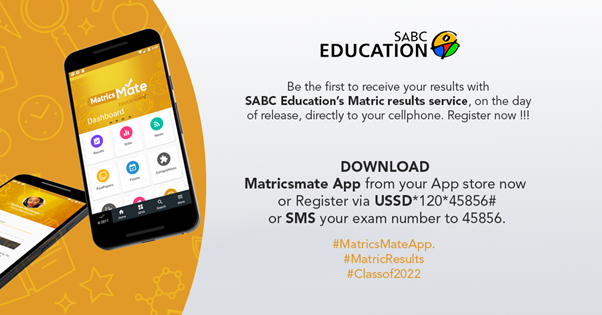
The SABC Education Matric Results service will release the results to all students across all Provinces who have registered using the SMS, USSD and MatricsMate App on the mid-night of the day of the release.

We encourage learners to pre-register using the SABC Education Matric Results service, and just by registering with us you stand the chance to win instant airtime!

Register using any of our registration mechanisms, either SMS or USSD and you stand the chance to WIN your share of R10, 000 in airtime! You can also download our MatricsMate App from Google Play and Apple App Stores to receive your National Senior Certificate Examination results.


Learners should register with their exam number on the platform of their choice to access their results.


Register on our mobile services to receive your 2022 Matric Results:

SMS

  • SMS your exam number to 45856
  • The system verifies the Exam number; your exam number must be correct in order to be accepted.
  • Learners will be charged R1,50 per SMS, free SMS’s do not apply

USSD

  • Dial *120*45856# enter exam number to register
  • You will be charged R1,50 per minute on USSD.
  • Results will be sent to your phone once they are available

MATRICSMATE  APP

  • Download for free from Google Play and Apple App Stores

Should the learners have queries relating to registration and the use of the SABC Education Matric Results service, they can contact our call centre on 011 507 4755, Monday to Friday from 8am to 5pm. However, on the day of the release, the call center will operate from Midnight to 5pm.

For further details on the SABC Education Matric Results services, contact Raymond Moruku, Project Manager for Matric Results campaign, SABC Education, morukurk@sabc.co.za or visit www.sabceducation.co.za.

Embargo on the publication of results: 

The 2022 National Senior Certificate (NSC) examination results will be released at the different schools at 08:00 on Friday, 20 January 2023. These results will be made available to the media houses/service providers on Thursday, 19 January 2023, at 07:00. The publication of results will be embargoed until 06:00 on Friday, 20 January 2023 for all PEDs results, except in the Western Cape.

The Western Cape data will be released to the media houses/service providers on Friday, 20 January 2023 at 12:00. It must be emphasized that the integrity and credibility of the examinations depend on how the results are handled by the various service providers. Failure to abide by the above-mentioned conditions will result in legal action against the recipient of the data, and the recipient will be barred access to all examination results/data in future.

NB: Bursaries are available from NSFAS for any course of study. Contact NSFAS on 08600 NSFAS (0860067327), e-mail info@nsfas.org.za or visit www.nsfas.org.za.

SABC Education: Enriching Minds, Enriching Lives”.


END

Five Work Ready Skills Every Graduate Will Need

By Cengage Student Ambassador Jayshree Hanragee, a postgraduate student at the University of Pretoria. Jayshree has a Master’s a degree in Anatomy and is currently pursuing her PhD to realise her educational aspirations of a career as an academic. One of the learning tools used by Ms Harangee at the University of Pretoria is Cengage’s SAM (Skills Assessment Manager) which provides online student training and assessment for Microsoft Office and computer concepts. Students observe, practice and actively apply skills live in the Office application, preparing students with the skills they need for academic and professional success. Flexible reporting tools, automatic grading and instant student feedback promote student self- study and help to save instructors’ time. The University of Pretoria use Cengage’s SAM to teach their AIM course. Students use SAM weekly during face-to-face lessons to learn Microsoft Office skills including Excel, Word and PowerPoint which are vital in preparing them for their future endeavours, both at university and in the workplace.

Here, Ms Harangee talks about her experiences in transitioning from student to working professional and shares her top tips for developing work-ready skills.

From my years as an undergraduate through to working while studying for my Master’s degree, combining study with full-time employment has undoubtedly been a challenge. During this period I have seen many candidates for job roles from all walks of life, each of them diverse in their knowledge, talents and abilities.

The work environment can seem like the survival of the fittest and it has been claimed that recent high school and college graduates are underprepared to enter the workplace when they finish their studies.

The qualities that establish trust, cultivate a leadership mindset and produce productive results are the most valuable in today’s world. So, as a young and inexperienced professional, what can you do to maximise your success when entering the world of work? Here are a few pointers to help you on your way to being job-ready.

  1. Be Realistic

Expecting to get a high-level position at beginners stage is generally an unrealistic goal when searching for your first full-time role. It’s fine to start at the bottom. Finding your dream job in today’s modern and dynamic job market requires flexibility in your approach. You must be willing to attempt new strategies that will help you cast a wide net and boost your chances of being employed. It is obvious that digital technology has had a significant impact on recruitment trends, so take advantage of it.

  1. Teamwork Makes the Dream Work

In the workplace, skills serve as a sort of trade. The more skills you have, the more valued you will be as an employee. Knowing how to effectively collaborate with others and play to people’s strengths is a valuable skill for success when you initially start out. The more you understand how to function in a group, the better you’ll be able to perform as a unit. Without teamwork skills, you’ll be at a disadvantage within the company.

  1. Communication is Key

Another important aspect to consider for your goal of employability is being able to communicate effectively. Always communicate what you want to say in a concise, accurate and suitable manner, and aim to maximise the efficacy of your communications by using methods appropriate to the situation.

  1. Focus on the Solution

Employers reward employees who can work through problems on their own or as part of a team by outlining difficulties, brainstorming options, discussing ideas, and ultimately making sound judgments. Therefore, developing effective problem solving is one of the key attributes that can make you stand out from the crowd.

  1. Confidence Breeds Success

Confidence may appear to be a personality feature, but it is a talent that can be learned, improved and developed just like any other. You can boost your confidence in certain areas simply by practicing; the more you do something, the more confident you will become at it.

Regardless of what industry you desire to work in, these top five skills can help you to perform more effectively in your search for success. Good luck.

About Cengage Skills Access Manager (SAM)

Cengage’s SAM (Skills Assessment Manager) provides online student training and assessment for Microsoft Office and computer concepts. Students observe, practice and actively apply skills live in the Office application, preparing students with the skills they need for academic and professional success. Flexible reporting tools, automatic grading and instant student feedback promote student self- study and help to save instructors’ time. The University of Pretoria use SAM to teach their AIM course. Students use SAM weekly during face-to-face lessons to learn vital Microsoft Office skills including Excel, Word and PowerPoint.

About Cengage

Cengage EMEA is part of Cengage Group, a global education technology company dedicated to removing the barriers to higher education and providing every student with access to quality teaching and learning and a brighter future. Focussed on making education more accessible, sustainable and affordable, its product portfolio includes online learning platforms that offers students everything they need in one place – textbooks, eTextbooks, homework, study and assessment tools, and resources to develop employability skills to help them transition successfully into the hugely competitive global workplace. 

Cengage EMEA sells its products and services to over 52 countries throughout Europe, the Middle East and Africa, covering a diverse cultural range, each with its own particular and varied curriculum needs for educational solutions.